Understanding Childhood Apraxia of Speech (CAS)
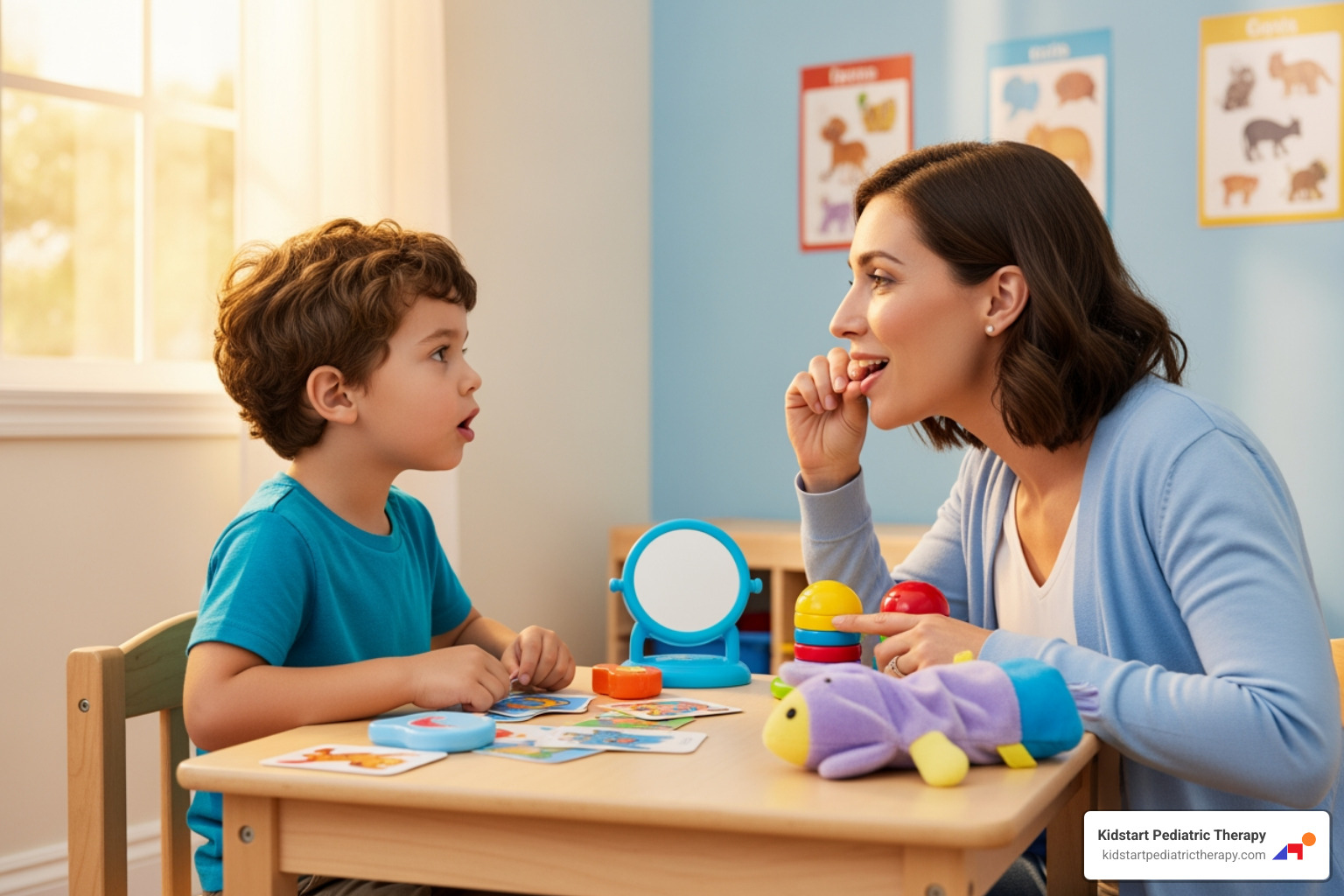
For parents navigating the complexities of their child’s speech development, Apraxia speech therapy offers a specialized path to open uping clear communication. This therapy is highly effective because it directly addresses the root cause of apraxia: a motor planning challenge, not a problem with muscle strength.
- What is Apraxia Speech Therapy?
- It’s a specialized treatment for a motor speech disorder called Apraxia of Speech.
- It helps individuals learn to plan and sequence the movements of their tongue, lips, and jaw for clear speech.
- Therapy focuses on retraining the brain-to-mouth signals to produce accurate sounds and words.
- It uses principles of motor learning, such as intense practice, repetition, and specific cueing strategies.
Childhood Apraxia of Speech (CAS) is a rare motor speech disorder where the brain struggles to send the right messages to the mouth muscles for speech. This means a child knows what they want to say, but their mouth just won’t cooperate. It’s different from a simple speech delay or muscle weakness. Instead, it’s a challenge with motor planning – the complex steps your brain takes to tell your tongue, lips, and jaw how to move.
While this can be frustrating for both children and parents, there is significant hope. Specialized Apraxia speech therapy can make a profound difference, guiding children to develop clear and consistent speech. This guide will explore what CAS is, how it’s diagnosed, and the most effective therapy approaches. We’ll also cover how parents can support their child’s journey.
As Shawn Chuang, with KidStart Pediatric Therapy, I specialize in early intervention, integrating therapies like Apraxia speech therapy to help children build foundational communication skills. Our Therapy-Integrated Learning Program focuses on holistic, evidence-based approaches to empower children to reach their fullest potential.
What is CAS? The Brain-Mouth Disconnect
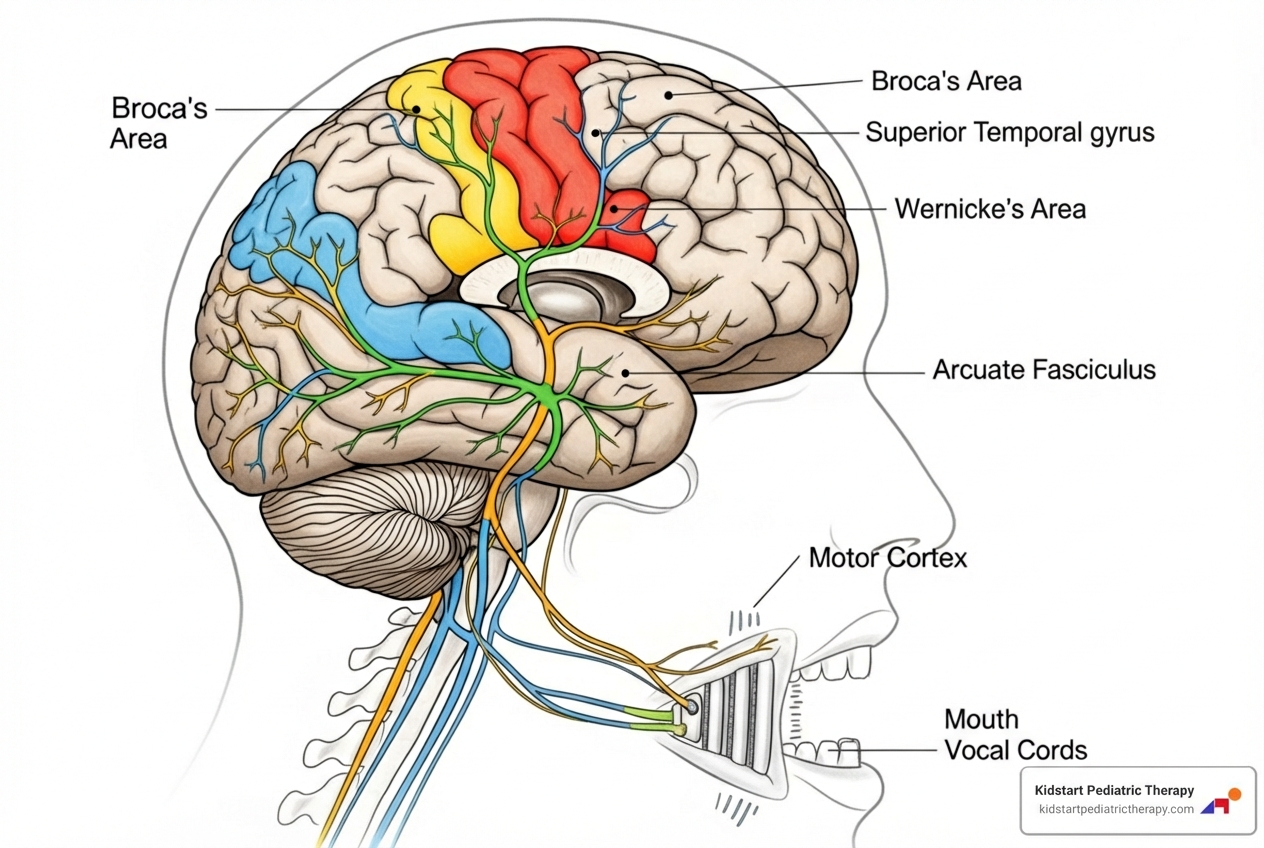
Imagine knowing exactly what you want to say, but your mouth just won’t cooperate to make the right sounds. This is the daily reality for children with Childhood Apraxia of Speech (CAS). CAS is a neurological motor speech disorder, meaning it originates from a challenge in the brain’s ability to plan and program the precise movements needed for speech. This is not due to muscle weakness or paralysis; the muscles themselves are fine. The issue lies in the brain’s ability to send accurate, consistent, and timely signals to the lips, tongue, jaw, and vocal cords.
This “brain-to-mouth disconnect” makes it difficult for children with CAS to sequence sounds, syllables, and words correctly. It’s a rare condition, affecting approximately 1 to 2 children out of every 1,000. Because it’s a motor planning issue, it requires a very specific and specialized approach to Apraxia speech therapy that differs significantly from therapy for other speech sound disorders.
For more information on how speech develops in children, you can explore our resources on Children Speech Language Development.
Recognizing the Signs and Symptoms of CAS
Identifying CAS early is crucial for effective intervention. While symptoms can vary from child to child, there are several key indicators that parents and caregivers might notice:
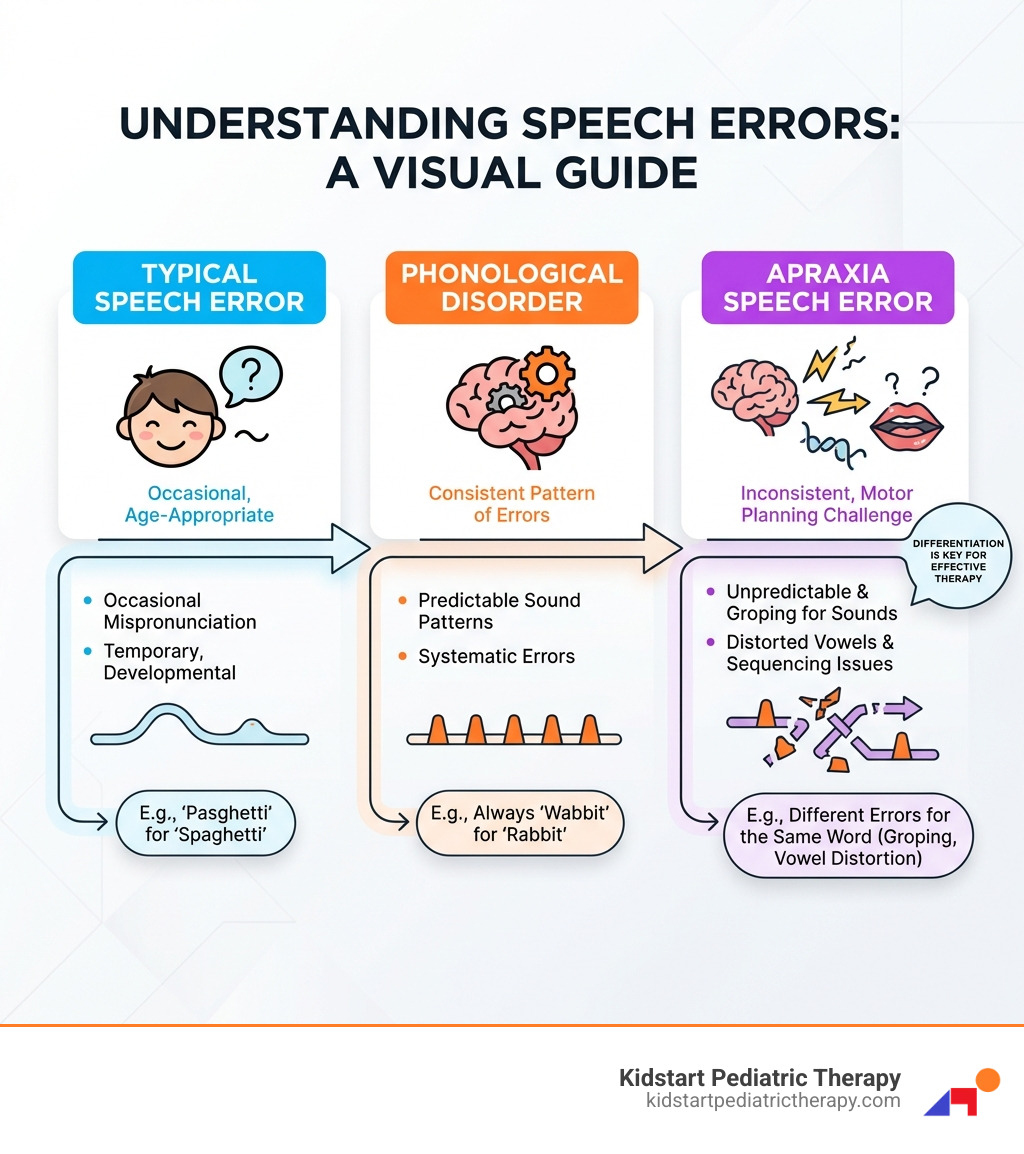
- Inconsistent Speech Errors: A child might say a word correctly one time and then mispronounce it differently the next. This inconsistency is a hallmark of CAS.
- Groping for Sounds: You might observe your child’s mouth searching or “groping” for the correct position to make a sound, often accompanied by visible struggle.
- Distorted Vowels: Vowels, which are usually easier for children to produce, can be distorted or difficult for children with CAS.
- Difficulty with Longer Words and Phrases: As the length and complexity of words or sentences increase, so does the difficulty for a child with CAS. They might find shorter words easier to say.
- Incorrect Prosody: Prosody refers to the rhythm, stress, and intonation of speech. Children with CAS may speak in a monotone, use unusual stress patterns, or have long pauses between sounds or syllables.
- Better Receptive Language: Often, children with CAS understand language much better than they can express it. They know what they want to say, but their mouth won’t cooperate.
- Limited Babbling as an Infant: Some parents report that their child with CAS had very little or no babbling as a baby.
- Difficulty Imitating Speech: Repeating words or phrases after someone else can be particularly challenging.
If you observe these signs, it’s important to seek a professional evaluation.
CAS vs. Acquired Apraxia and Co-Occurring Conditions
It’s important to distinguish between Childhood Apraxia of Speech (CAS) and Acquired Apraxia of Speech (AOS). CAS is a developmental disorder, meaning it’s present from birth and affects a child’s ability to learn and develop speech motor planning. Acquired Apraxia of Speech, on the other hand, typically occurs in adults due to neurological damage, such as a stroke, traumatic brain injury, tumor, or progressive neurological disease. While the underlying motor planning difficulties are similar, their onset and causes differ significantly. This guide focuses primarily on CAS, as it pertains to pediatric therapy.
CAS often doesn’t occur in isolation. Many children with CAS may have co-occurring conditions, including:
- Fine Motor Delays: Difficulties with precise hand movements, such as buttoning clothes or using utensils.
- Sensory Processing Issues: Challenges in how the brain processes sensory information, leading to over- or under-responsiveness to stimuli.
- Language Disorders: While CAS is a speech disorder, it can often co-occur with broader language delays or disorders, affecting both expressive and receptive language.
- Other Developmental Disorders: CAS can sometimes be part of larger disorders like cerebral palsy, autism, or epilepsy. For those interested in the connections between speech and conditions like cerebral palsy, you can find more information on Speech Therapy Cerebral Palsy.
Our holistic approach at Kidstart Pediatric Therapy in Burnaby, Coquitlam, and Greater Vancouver ensures that we consider all aspects of a child’s development when addressing CAS.
The Path to Diagnosis and a Treatment Plan
How is Childhood Apraxia of Speech Diagnosed?
Diagnosing CAS is a complex process that requires the expertise of a highly skilled Speech-Language Pathologist (SLP). There is no single medical test, like a blood test or an MRI, that can definitively diagnose CAS. Instead, our SLPs conduct a comprehensive evaluation that includes:
- Detailed Case History: We gather information about your child’s developmental milestones, medical history, and any concerns you’ve observed.
- Observation of Speech Patterns: Our SLPs carefully listen to and analyze your child’s speech, looking for the characteristic inconsistencies, groping, and prosody issues. We assess how your child produces sounds, syllables, words, and sentences in various contexts.
- Oral-Motor Assessment: This involves examining the structure and function of your child’s mouth, lips, tongue, and jaw. We check for muscle weakness (which is typically absent in CAS) and assess their ability to perform non-speech movements, like smiling or blowing bubbles.
- Language Assessment: We evaluate both your child’s understanding of language (receptive language) and their ability to express themselves (expressive language) to rule out other language disorders.
- Ruling Out Other Causes: The SLP will consider and rule out other potential causes for speech difficulties, such as hearing loss, muscle weakness (dysarthria), or general developmental delays.
The diagnosis of CAS is a clinical one, relying heavily on the SLP’s expertise in identifying the unique motor planning challenges that differentiate CAS from other speech disorders. To learn more about our team and services, visit our Speech Language Pathologist page.

Why a Specialized Assessment is Crucial
A specialized assessment by an SLP with expertise in motor speech disorders is absolutely crucial. Why? Because CAS can often be mistaken for a severe speech delay or a phonological disorder. However, the treatment approaches for these conditions are very different. Misdiagnosis can lead to ineffective therapy and prolonged frustration for the child and family.
Our experienced SLPs in Burnaby, Coquitlam, and Greater Vancouver are trained in differential diagnosis, which means they can accurately identify the unique features of CAS. This motor speech expertise ensures that your child receives the most appropriate and effective Apraxia speech therapy from the outset. A precise diagnosis forms the foundation for a truly effective and individualized treatment plan, paving the way for your child’s progress. If you’re concerned about speech delays, our services for Speech Delay Therapy in Burnaby can provide the clarity and support you need.
Core Principles of Effective Apraxia Speech Therapy
Effective Apraxia speech therapy is not a one-size-fits-all solution. It’s a highly specialized and intensive process rooted in the principles of motor learning. Think of it like learning to play a musical instrument or master a complex dance move – it requires consistent, targeted practice to build new neural pathways and refine muscle memory.
Motor Learning: The Foundation of Apraxia Speech Therapy
The core of successful Apraxia speech therapy lies in applying motor learning principles. Just as you wouldn’t learn to ride a bike by just reading about it, children with CAS need to practice the physical movements of speech. This means:
- Practice and Repetition: Children with CAS need a high degree of practice and repetition of speech targets. This isn’t just saying a word once; it’s saying it many times, often within a single session, to help the brain solidify the motor plan.
- High Frequency and Intensity: Therapy is most effective when it’s frequent and intense. This often means multiple sessions per week, especially in the early stages, to build new motor plans efficiently.
- Building New Motor Plans: The goal is to help the brain learn and store the precise motor plans for producing speech sounds, syllables, and words. This is an active process of “re-programming” the speech system.
- Analogy to Learning a Sport: Consider how an athlete learns a new skill. They practice the movement repeatedly, receive specific feedback, and gradually refine their technique. Similarly, children with CAS need to “train” their speech muscles and brain connections.
Our approach aligns with the science of pediatric speech therapy, emphasizing early intervention and evidence-based practices for lifelong success. Learn more at The Science of Pediatric Speech Therapy: Early Interventions for Lifelong Success.
Key Therapeutic Techniques and Strategies
Within the framework of motor learning, several specific techniques are employed in Apraxia speech therapy:
- Cueing Strategies: These are temporary aids that help a child produce a sound or word. The goal is to gradually reduce and eliminate these cues as the child gains independence.
- Tactile Cues: Involve physically touching the child’s face or neck to guide articulation (e.g., gently pressing lips together for a ‘p’ sound).
- Visual Cues: Showing the child how to make a sound by modeling mouth movements in a mirror or using pictures.
- Verbal Cues: Providing verbal prompts or instructions (e.g., “Put your lips together and make air pop out for ‘p'”).
- Feedback Types: How the therapist responds to the child’s attempts is critical for learning.
- Knowledge of Performance (KP): Specific feedback about how the movement was made (“Your tongue was a little too far back for that ‘t’ sound.”).
- Knowledge of Results (KR): General feedback on the outcome (“Good job! You said ‘ball’!”). Feedback is often delayed slightly to encourage self-monitoring.
- Rhythm and Prosody: Addressing the natural flow and intonation of speech is vital.
- Tapping: Using finger tapping or clapping for each syllable can help children pace their speech and understand word stress.
- Melodic Intonation Therapy (MIT): While often used for acquired apraxia, principles of MIT (using exaggerated intonation patterns) can sometimes be adapted for CAS to facilitate speech production.
- Functional Words and Speech Sequences: Therapy focuses on words and phrases that are meaningful and useful to the child (e.g., “hi,” “bye,” “more,” “my turn”). Practicing these in context is more effective than isolated sound drills.
- Speech Sequences: Instead of just practicing individual sounds, therapy often builds from sounds to syllables, then to words, and eventually to short phrases and sentences, gradually increasing complexity.
Non-speech oral motor exercises (like blowing bubbles or licking peanut butter), while seemingly helpful, are generally not supported by current research as effective for improving speech production in CAS. Effective therapy focuses on the actual movements of speech.
Adapting Apraxia Speech Therapy to Your Child’s Needs
Every child with CAS is unique, and their therapy plan must reflect that. Our SLPs in Burnaby, Coquitlam, and Greater Vancouver create highly individualized treatment plans based on a child’s specific needs and the severity of their CAS:
- Severity Levels:
- Non-verbal children: Therapy might start with very basic sounds, gestures, or even Augmentative and Alternative Communication (AAC) to establish a functional communication system.
- Mildly affected children: Focus might be on refining articulation of complex sounds, improving prosody, and increasing speech fluency and intelligibility in conversational contexts.
- Individualized Treatment Plans: Our plans are dynamic and evolve as your child progresses. We continuously assess and adjust targets, cueing, and practice methods to ensure optimal progress. This personalized approach is what makes our Speech Therapy for Kids in Burnaby so effective.
- Dynamic Approach: We celebrate every small victory and adapt quickly if a particular strategy isn’t working, ensuring your child remains engaged and motivated.
The Role of Family and Technology in Treatment
How Parents Can Be Powerful Partners in Therapy
You, as parents and caregivers, are the most important members of your child’s therapy team. Your involvement is absolutely crucial for maximizing progress in Apraxia speech therapy. Our SLPs will guide you on how to best support your child at home:
- Home Practice: Consistent, short bursts of home practice, guided by your SLP, reinforce skills learned in therapy. This helps solidify new motor plans.
- Creating a Supportive Environment:
- Patience and Positivity: Be patient with your child’s attempts and celebrate every effort, no matter how small. A positive attitude encourages them to keep trying.
- Modeling Communication: Speak clearly and at a moderate pace, providing a good speech model for your child.
- Not Pressuring: Avoid pressuring your child to speak or “perform.” This can create anxiety and hinder progress.
- Advocacy: You are your child’s best advocate, whether it’s ensuring consistent therapy or working with their school.
For practical tips on maintaining consistency with home exercises, check out our Strategies for Encouraging Consistency in Home Speech Therapy Exercises: Speech and Language Pediatric Therapy Guide. Additionally, organizations like Apraxia Kids offer invaluable support and resources for families navigating CAS.
When to Consider Augmentative and Alternative Communication (AAC)
For some children with severe CAS, especially in the early stages, verbal speech can be extremely challenging and frustrating. In these cases, Augmentative and Alternative Communication (AAC) can be a powerful tool.
- AAC as a Bridge: AAC methods, such as picture boards, communication apps on tablets, or dedicated speech-generating devices, provide a way for your child to communicate their needs and wants.
- Reducing Frustration: Having a reliable means of communication can significantly reduce frustration for both the child and family.
- Supporting Verbal Speech: Importantly, AAC does not hinder verbal speech development; in fact, research shows it can often support and even facilitate verbal speech by reducing pressure and providing a model. It gives the child a voice while they are still developing their verbal skills.
Our SLPs can help determine if AAC is appropriate for your child and guide you through its implementation. For more insights into using AAC in therapy, explore A guide to using AAC in therapy.
Finding Professional Support and Resources
The field of Apraxia speech therapy is constantly evolving with new research and advancements. Our SLPs at Kidstart Pediatric Therapy stay informed about the latest evidence-based practices to provide your child with the most effective care.
- Role of SLPs: Speech-Language Pathologists are the primary professionals who diagnose and treat CAS. Look for an SLP with specialized training and experience in motor speech disorders.
- Professional Organizations: The American Speech-Language-Hearing Association (ASHA) is a key resource for information, professional standards, and finding certified SLPs.
- School Support: Children with CAS are eligible for speech therapy services through their school system. You can request an evaluation, and if your child qualifies, an Individualized Education Program (IEP) will be developed to outline their specific needs and services. This is a right protected by laws like the Americans with Disability Act (ADA). We encourage parents to be strong advocates for their child’s needs within the school system.
Frequently Asked Questions about Apraxia Therapy
How long does apraxia speech therapy take?
The journey with Apraxia speech therapy is highly individualized. There’s no fixed timeline, as it depends on several factors:
- Severity of CAS: Children with more severe apraxia will generally require longer and more intensive intervention.
- Frequency of Therapy: Consistent and frequent therapy sessions (often multiple times a week) can lead to faster progress.
- Consistency of Home Practice: Regular practice at home, guided by your SLP, significantly accelerates the learning process.
- Individual Learning Pace: Every child learns at their own pace.
It’s often described as a marathon, not a sprint. While progress may seem slow at times, consistent effort yields significant results over time.
Is apraxia a lifelong condition?
While CAS is a neurological condition that children are born with, significant progress is absolutely possible with intensive, appropriate Apraxia speech therapy. Many children learn to communicate effectively and achieve functional verbal communication. Some children may retain subtle characteristics of apraxia, such as mild prosody differences or occasional articulation challenges, but these often do not significantly impact their overall intelligibility or communication skills in adulthood. Early and consistent intervention is key to maximizing a child’s potential.
Can my child get help for apraxia at school?
Yes, absolutely! In British Columbia, children with CAS are entitled to receive speech-language pathology services through their school district.
- Evaluation Process: You can request that your child be evaluated by the school’s speech-language pathologist. The school has a process to follow, which may involve a screening team.
- Individualized Education Program (IEP): If your child is diagnosed with CAS and requires support, an IEP will be developed. This plan outlines specific goals, services, and accommodations to help your child succeed academically and socially.
- Your Child’s Rights: The Americans with Disability Act (ADA) and provincial education policies ensure that children with disabilities, including CAS, receive the necessary support to access education. We encourage parents to actively participate in the IEP process and collaborate with school staff.
Your Partner in Opening up Your Child’s Voice
Navigating a diagnosis of Childhood Apraxia of Speech can feel overwhelming, but we want to assure you that you are not alone. CAS is a treatable motor speech disorder, and with the right support, your child can learn to communicate clearly and confidently.
At Kidstart Pediatric Therapy, we believe in a compassionate, personalized, and holistic approach to Apraxia speech therapy. Our highly qualified and certified SLPs in Burnaby, Coquitlam, and Greater Vancouver are dedicated to providing evidence-based, intensive therapy custom to your child’s unique needs. We understand the importance of early intervention and the crucial role you play as parents in your child’s success.
We are here to walk alongside you, offering the expertise, guidance, and encouragement needed to open up your child’s voice. Together, we can empower your child to reach their fullest potential and communicate effectively with the world.