
Why Understanding Child Anxiety Therapy Matters for Your Family
Child anxiety therapy is a specialized treatment that helps children and adolescents manage excessive worry, fear, and avoidance behaviors. Using evidence-based approaches like Cognitive Behavioral Therapy (CBT), exposure strategies, and parent coaching, therapists teach children practical skills to recognize anxious thoughts, face their fears, and build confidence. Therapy often includes skills training in relaxation, problem-solving, and emotional regulation, all adapted to the child’s age.
While fears and worries are a normal part of growing up, they can become a clinical concern when they are intense, persistent, and disrupt school, friendships, or daily routines.
The numbers tell an important story. Between 2016 and 2020, diagnoses of anxiety in children aged 3-17 grew by 29%. The U.S. Preventive Services Task Force now recommends anxiety screening for all children aged 8 to 18.
Here’s what matters most: anxiety disorders are highly treatable. Research shows that about two-thirds of children treated with CBT see substantial improvement. Learning to manage anxiety early provides lifelong coping skills that protect mental health into adulthood.
This guide will help you understand childhood anxiety, know when to seek help, and see how therapy can make a real difference. You’ll learn about treatment options, age-specific strategies, and how you can support your child at home.
As Shawn Chuang, founder of KidStart Pediatric Therapy, I’ve seen how integrated, developmentally informed care transforms outcomes for anxious children through our Therapy-Integrated Learning Program (TILP). Our multidisciplinary team combines speech-language therapy, occupational therapy, and behavioral strategies to address the whole child—including emotional regulation challenges like anxiety—in Burnaby and Coquitlam.
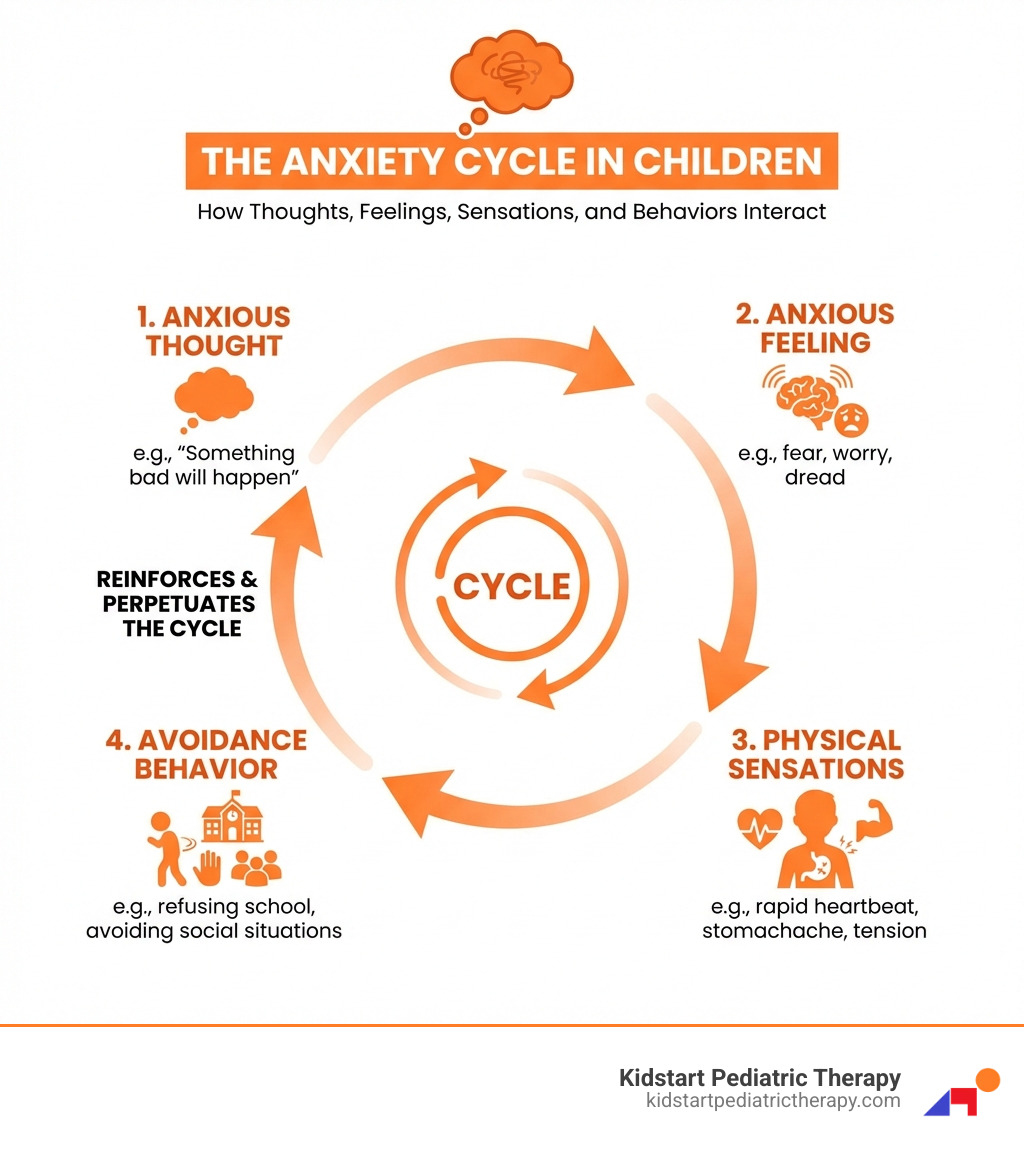
Understanding Anxiety in Children: Signs, Symptoms, and Causes
It’s normal for children to experience fear and worry. But when these feelings become overwhelming, persistent, and interfere with daily life, it might be an anxiety disorder. Recognizing the difference can be challenging, so we’re here to help you understand the signs and contributing factors.

Common Signs and Symptoms of Anxiety:
Anxiety can manifest in emotional, behavioral, and physical ways. Key indicators include:
- Emotional Signs: Constant worrying, nervousness, irritability, or frequent, out-of-proportion tantrums. Older children may imagine the worst possible outcomes (catastrophic thinking).
- Behavioral Signs: Difficulty concentrating, clinginess, and struggling with separation. A key sign is avoidance of school, social events, or new activities, along with seeking excessive reassurance.
- Physical Symptoms: Frequent, unexplained stomachaches or headaches, trouble sleeping, changes in eating habits, and feeling tense or fidgety.
For example, a child with separation anxiety may become extremely distressed when away from parents, while a child with social anxiety may worry excessively about school or peer interactions.
Potential Causes and Contributing Factors to Childhood Anxiety Disorders:
Anxiety disorders usually stem from a combination of factors, which helps us tailor effective child anxiety therapy.
- Genetics: Anxiety can run in families, so a child may be more predisposed if a close relative has an anxiety disorder.
- Environment: Stressful life events (like family conflict, moving, or bullying) and observing anxious behaviors in others can trigger or worsen anxiety.
- Temperament: Naturally sensitive, cautious, or inhibited children may be more prone to anxiety.
- Modern Pressures: The fast pace of modern life, over-scheduling, and societal stressors can contribute to a rise in childhood anxiety.
- Co-occurring Conditions: Conditions like ADHD and Autism Spectrum Disorder (ASD) often co-occur with anxiety.
Due to its increasing prevalence, the U.S. Preventive Services Task Force recommends scientific research on childhood anxiety screening for all children aged 8 to 18. Early identification is key to better outcomes.
When to Seek Professional Help
Consider professional help when anxiety symptoms are persistent, severe, and significantly impact your child’s quality of life. Consider reaching out to a professional if you notice:
- School Difficulties: Refusing to go to school, trouble concentrating, or declining academic performance.
- Social Withdrawal: Avoiding friends, parties, and other social interactions.
- Sleep Disturbances: Persistent trouble sleeping or frequent nightmares.
- Physical Complaints: Frequent, unexplained headaches or stomachaches.
- Impaired Daily Functioning: Inability to participate in age-appropriate activities or enjoy things they once loved.
- Constant Reassurance Seeking: Worries return quickly even after being reassured.
- Worsening Symptoms: Anxiety doesn’t improve or is getting worse over time.
If you observe these patterns, an assessment from a mental health professional is a good first step toward an effective child anxiety therapy plan.
Differentiating Normal Fears from an Anxiety Disorder
One of the trickiest parts of navigating childhood anxiety is distinguishing between typical, age-appropriate fears and a clinical anxiety disorder. An anxiety disorder involves fear that is out of proportion to the actual threat, is persistent, and severely impacts a child’s functioning.
- Age-Appropriate Fears:
- Toddlers (1-3 years): Fear of strangers, loud noises, separation from parents.
- Preschoolers (3-6 years): Fear of imaginary monsters, the dark, being alone.
- School-Aged Children (6-12 years): Fear of school performance, natural disasters, physical harm, social rejection.
- Adolescents (12-18 years): Fear of social judgment, academic failure, future uncertainties.
Here’s a simple comparison to help illustrate the difference:
| Feature | Typical Childhood Fear | Clinical Anxiety Disorder |
|---|---|---|
| Intensity of Worry | Proportional to the actual threat. | Excessive and out of proportion to the actual danger. |
| Duration of Symptoms | Transient, coming and going. | Persistent, lasting for weeks or months. |
| Impact on Life | Minimal or no impact on daily functioning. | Interferes with school, social life, family routines, sleep, or eating. |
| Reassurance | Generally effective in calming the child. | Ineffective; worries quickly return even after reassurance. |
When worries become “excessive, persistent, and cause notable distress or impairment in day-to-day functioning beyond actual risk,” they meet the criteria for a clinical anxiety disorder. Our goal at Kidstart Pediatric Therapy is to help your child regain control and joy in their life by addressing these debilitating patterns.
A Guide to Effective Child Anxiety Therapy Approaches
When a child’s anxiety becomes a clinical concern, effective, evidence-based child anxiety therapy can make a profound difference. The goal is not to eliminate fear but to help children build coping skills, reframe anxious thoughts, and reduce avoidance behaviors so they can engage fully with life.
Anxiety disorders in children are highly treatable. Research shows that Cognitive Behavioral Therapy (CBT) is the first-choice treatment for mild to moderate anxiety, with about two-thirds of children showing substantial benefits. For severe cases, CBT combined with medication is often recommended.
At Kidstart Pediatric Therapy, we use a holistic, integrated approach to child anxiety therapy, incorporating evidence-based modalities like:
- Cognitive Behavioral Therapy (CBT): The gold standard for treating child anxiety.
- Exposure-Based Strategies (including Exposure and Response Prevention – ERP): A key part of CBT that helps children face fears gradually.
- Acceptance and Commitment Therapy (ACT): Focuses on accepting difficult thoughts and committing to value-driven actions.
- Parent-Child Interaction Therapy (PCIT): Coaches parents to improve interactions and manage anxiety-driven behaviors.
How Does Cognitive Behavioral Therapy (CBT) for child anxiety therapy work?
CBT helps children understand the link between their thoughts, feelings, and behaviors. It teaches them to be “detectives” of their own minds, identifying and challenging anxious thoughts.
Key components of CBT include:
- Psychoeducation: Helping children and parents understand what anxiety is and that it can be managed.
- Identifying Anxious Thoughts: Recognizing negative, distorted, or catastrophic thoughts (e.g., “Everyone will laugh at me”).
- Cognitive Restructuring: Learning to challenge and replace unhelpful thoughts with more balanced, realistic ones.
- Behavioral Experiments: Testing anxious predictions in a safe way to see that feared outcomes are unlikely.
- Relaxation Techniques: Using tools like deep breathing and mindfulness to calm the body and mind.
- Problem-Solving Skills: Developing strategies to handle real-life challenges that cause worry.
Our integrated approach at Kidstart Pediatric Therapy combines CBT with occupational and speech therapy to support overall emotional regulation. Learn more about our approach to behavior therapy.
The Role of Exposure-Based Strategies
Exposure and Response Prevention (ERP), a core part of CBT, is based on the principle that facing fears is more effective than avoiding them. Avoidance provides temporary relief but strengthens anxiety long-term.
ERP works by:
- Gradual Exposure: Creating a “fear ladder” that ranks feared situations from least to most frightening.
- Facing Fears Incrementally: With a therapist’s support, the child gradually confronts these situations, starting with the easiest. They stay in the situation until the anxiety naturally decreases (habituation).
- Preventing Avoidance: The child learns to resist safety behaviors or rituals, finding that the feared outcome doesn’t happen or that they can handle the discomfort.
- Building Confidence: Successfully navigating the fear ladder builds mastery and proves that anxious predictions are often untrue.
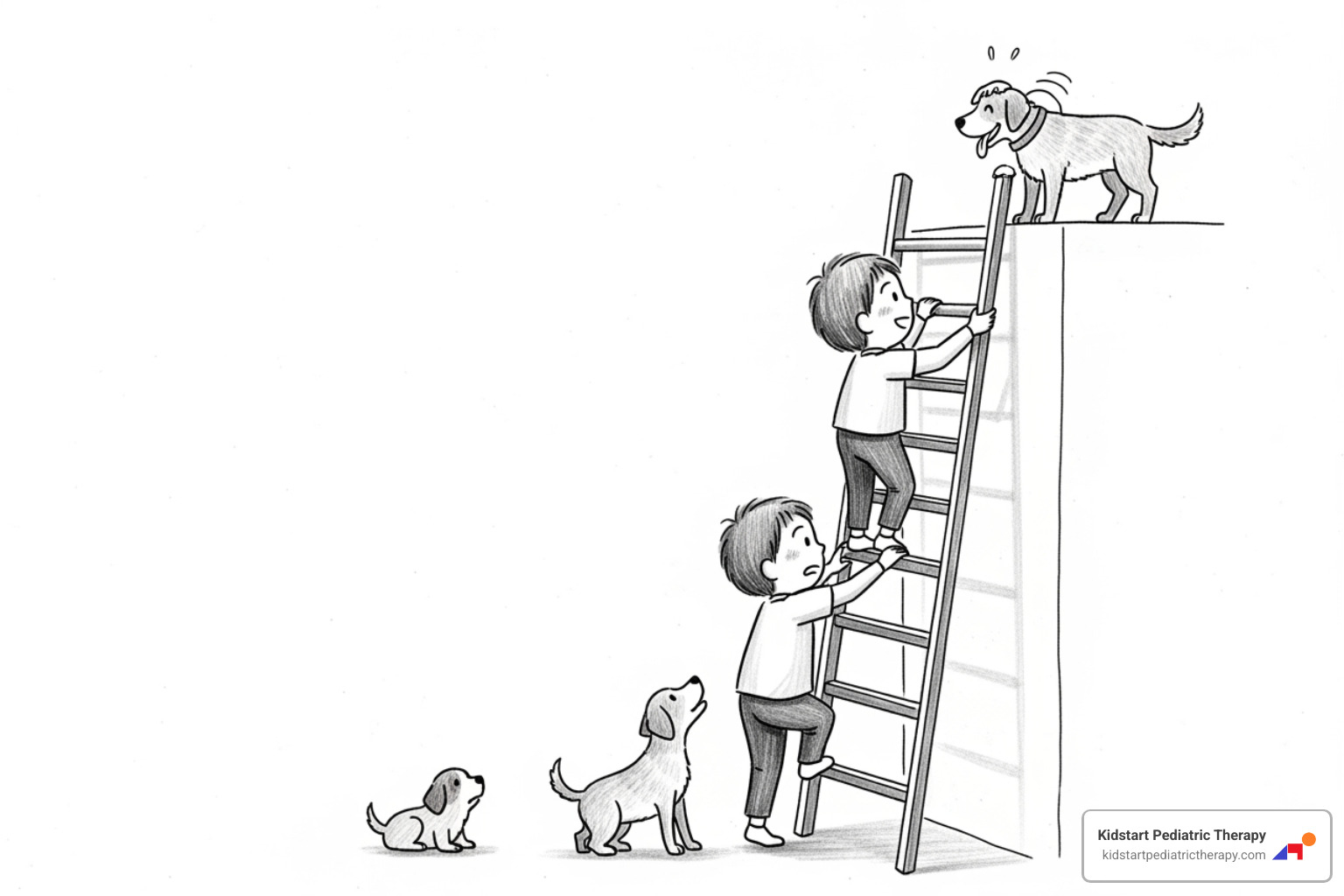
This structured process teaches children that they can tolerate anxiety and that feared situations are less dangerous than their “bully brain” suggests.
Tailoring Treatment: Age-Specific Strategies and Support
Effective child anxiety therapy is not one-size-fits-all. At Kidstart Pediatric Therapy, we tailor our approaches to a child’s developmental stage, ensuring treatment is engaging and appropriate. The American Academy of Child & Adolescent Psychiatry’s Anxiety in Children fact sheet highlights these developmental differences.
Therapy for Young Children (Ages 3-7)
For young children who lack the verbal skills for traditional talk therapy, we use play and direct behavioral strategies.
- Play-Based Therapy: We use therapeutic play, like puppets, to help children explore fears, practice coping skills, and engage in gentle exposure activities.
- Parent Involvement is Key: Family-based CBT is highly effective for this age group. We coach parents on how to respond to anxiety, encourage bravery, and reduce accommodating behaviors.
- Simple and Concrete Methods: We use simple language, visual aids, and tangible rewards like sticker charts to motivate progress.
- Focus on Behavior: The primary goal is helping children engage in desired behaviors, such as going to school or sleeping in their own bed, and celebrating their small victories.
Our occupational therapists also integrate sensory strategies to help young children with emotional regulation. Learn more on our More info about occupational therapy for self-regulation page.
Therapy for School-Aged Children and Adolescents
As children’s cognitive abilities grow, therapy adapts.
- School-Aged Children (8-12 years): These children can engage with more direct cognitive strategies. We help them identify and challenge anxious thoughts, create fear hierarchies, and practice relaxation techniques. Therapy often focuses on school and peer-related anxieties.
- Adolescents (13-18 years): Therapy can dig deeper into cognitive restructuring, examining underlying beliefs. Common themes include social anxiety, academic pressure, and identity. Building independence and self-advocacy are key goals. Group therapy can also be very effective for teens, providing peer support and a safe space to practice social skills.
When is additional support or referral considered for child anxiety therapy?
While child anxiety therapy like CBT is highly effective, some situations may require additional support.
- Moderate to Severe Anxiety: For children with severe, impairing anxiety, research suggests that a combination of CBT and medication (like an SSRI) can be more effective than either treatment alone.
- Lack of Progress: If a child isn’t improving with therapy alone, medication might be discussed to help manage symptoms and make therapy more effective.
- Collaboration with Medical Professionals: We collaborate with your child’s pediatrician or a child psychiatrist to determine if medication is appropriate, discuss benefits and risks, and monitor its effects.
- Combined Approach: Medication is typically used alongside ongoing therapy. It can reduce the intensity of anxiety, making it easier for children to engage in therapy and practice new skills.
Any decision about medication is made carefully with medical professionals and full parental involvement. For more on the effectiveness of CBT, see this Research on CBT for youth anxiety.
The Parent’s Role: How to Support Your Anxious Child at Home
As a parent, your role in supporting your anxious child is invaluable. Your actions at home can significantly complement professional child anxiety therapy and accelerate progress. Parents often act as “co-therapists” in their child’s journey.
Here’s how you can create a supportive and empowering environment:
- Validate Feelings, Don’t Dismiss Them: Acknowledge your child’s fear with empathy. Saying “I can see you’re feeling scared” helps them feel understood, rather than dismissing their worry.
- Model Healthy Coping: Children learn by watching. When you face your own stress with resilience (e.g., taking deep breaths, talking through a problem), you teach them how to cope.
- Avoid Reassurance Traps and Accommodation: Constantly reassuring your child or letting them avoid feared situations can strengthen anxiety. Instead, gently encourage them to face their fears. Parent-focused therapies like SPACE (Supportive Parenting for Anxious Childhood Emotions) train caregivers to reduce these accommodations.
- Encourage Bravery, Not Perfection: Praise your child’s effort in facing fears, no matter how small the step. Use specific praise like, “That was so brave of you to try that!” This builds self-efficacy.
- Set Clear Expectations and Maintain Routines: Predictable routines for bedtime, homework, and family time can be very comforting for an anxious child.
- Foster Open Communication: Create a safe space for your child to talk about their worries without judgment.
The goal is to help your child learn they can tolerate discomfort and manage challenges. Your consistent, supportive presence is one of the most powerful tools in their healing process. Our team at Kidstart Pediatric Therapy provides specific coaching to help you implement these strategies at home.
Frequently Asked Questions about Child Anxiety Therapy
We know you likely have many questions when considering therapy for your child. Here are answers to some common inquiries about child anxiety therapy:
How do I find the right therapist for my child?
Finding the right therapist is crucial for successful child anxiety therapy.
- Look for Specialists: Seek therapists with specific training and experience in child and adolescent anxiety.
- Check Credentials: Ensure the therapist is a qualified, certified professional (e.g., a Registered Psychologist, Registered Clinical Counsellor). Our therapists at Kidstart Pediatric Therapy are highly qualified in their respective fields.
- Ask About Their Approach: Inquire about their methods. Evidence-based treatments like Cognitive Behavioral Therapy (CBT) are highly recommended.
- Ensure a Good Fit: The relationship between your child and the therapist is vital. Schedule an initial consultation to see if the therapist’s style is a good match for your family.
Our team of compassionate therapists in Burnaby, Coquitlam, and across Greater Vancouver is dedicated to helping children thrive.
How long does child anxiety therapy typically take?
The duration of child anxiety therapy varies based on:
- Severity and Type of Anxiety: Mild anxiety or specific phobias may resolve more quickly than severe or complex disorders.
- Child and Family Engagement: Progress is often faster when the child is engaged and the family practices strategies at home.
- Therapeutic Approach: A course of CBT for mild to moderate anxiety often takes 8 to 12 sessions. More complex cases may require 12-16 weeks or slightly longer.
Progress is gradual, but many children see benefits relatively quickly. “Booster sessions” may be recommended to reinforce skills.
What if my child refuses to go to therapy?
It’s common for children to be hesitant about therapy. Here’s how to approach it:
- Acknowledge Their Feelings: Validate their nervousness about trying something new.
- Explain Therapy in a Child-Friendly Way: Frame it as learning “superpower skills” to fight worries or “boss back” their “bully brain.”
- Focus on the Goal: Emphasize that therapy is about learning tools to feel braver, sleep better, or have more fun with friends.
- Arrange a “Meet and Greet”: An informal meeting with the therapist can ease apprehension.
- Parent-Only Sessions: For younger children, therapy can begin with parents learning strategies to implement at home.
Patience is key. We can partner with you to find the best way to engage your child in the support they need.
Child Anxiety Therapy
Understanding and addressing child anxiety is crucial for their well-being. While some worry is normal, persistent anxiety can impact a child’s development, school, and social life. The good news is that child anxiety therapy, especially evidence-based approaches like Cognitive Behavioral Therapy (CBT), offers powerful tools to help children manage their fears and thrive.
Therapy is custom to your child’s age, from play-based interventions for young children to cognitive strategies for teens. As a parent, your role in validating feelings and encouraging bravery at home is essential to their success.
Early intervention is key. By empowering children with lifelong coping skills, we help them build resilience and confidence. You are not alone on this journey.
At Kidstart Pediatric Therapy, our holistic, integrated approach combines occupational, speech, and behavior therapy to address the whole child. We are dedicated to helping children in Burnaby, Coquitlam, and across Greater Vancouver reach their full potential.
If you recognize signs of anxiety in your child, please reach out. We are here to provide compassionate, personalized care.
Contact us to learn more about our child anxiety therapy services in Coquitlam.